
Introduction: Apart from the establishment of e-commerce channels, the development of furniture e-commerce has a more significant impact on enterprises in terms of the transformation of internet thinking. For example, under the impetus of internet thinking, "Zuoyou Home Furnishings," a leading Shenzhen furniture enterprise, has achieved a transformation into product platformization, diversified channels, and supply chain flexibility. Its "Zuoyou Zuoke" series belongs to pure e-commerce platform products. The accelerated development of the internet and the faster integration of new technologies such as cloud computing, big data, and the Internet of Things into traditional industries have provided important opportunities for economic transformation and upgrading.
Editor's Note: Taking Shenzhen furniture as a case study, this article mainly introduces the transformation through several methods: upgrading traditional channels, innovating marketing strategies using "Internet+" thinking, and cross-border integration of upstream and downstream products for residential fine decoration.
1) When the global economy faces a crisis and Chinese furniture exports turn to the domestic market, if you are not prepared to "act" for innovation amidst increasing industry homogenization, will your enterprise still exist?
2) When the e-commerce trend surges and "Internet+" sweeps across various sectors of the Chinese economy, if you are not prepared to "act" for change, will your enterprise be safe?
3) When consumption accelerates its upgrade and custom furniture erodes the traditional ready-made furniture market like a tiger, if you are not prepared to "act" for upgrading, will your enterprise decide to change?
4) When the industrialization of residential fine decoration strides forward under the spring breeze of policy, and the traditional furniture industry faces unprecedented impact once again, if you are not prepared to welcome the future, will your enterprise lose its way in this era?
The development of the industry will never be smooth sailing. Enterprises should not stand still; only by "planning according to the situation, acting according to the trend, and advancing with the trend," actively innovating in the wave of transformation, consolidating the core competitiveness of the enterprise, and actively seeking change, can they cope with the future calmly and achieve the guidance and promotion of trends.
However, the Chinese furniture industry has entered a gear-shifting period under economic influence, shifting from high-speed growth to medium-high-speed development. Under these circumstances, it is understandable that furniture enterprises that have not transformed and changed in time face market declines and blocked channels.
※ What pressures? What changes are needed?
Currently, on one hand, facing multiple pressures such as economic downturn, rising costs, and consumption upgrades, furniture enterprises are hesitant in their marketing strategies; on the other hand, facing multiple choices such as shopping malls, e-commerce, customization, alliances, and cross-border operations, furniture enterprises are indecisive in channel construction, and time and opportunities slip away in hesitation.
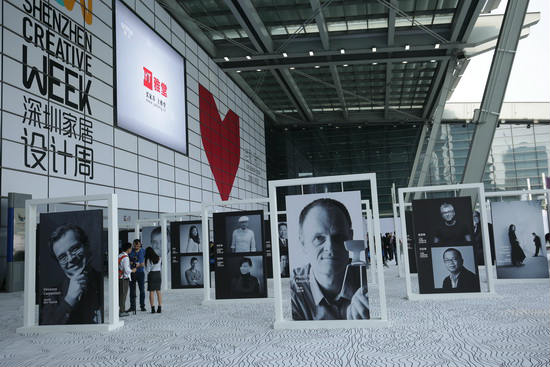
Shenzhen furniture, as a pioneering industrial cluster in Chinese furniture, has continuously increased its market share and brand influence over the past thirty years. Apart from core values such as quality, design, and innovation, the transformation and innovation of channels are also pivotal.
1. Diversified Transformation of Traditional Channels
When it comes to furniture market channels, the core is undoubtedly the distributor channel, especially the store model based on large shopping malls such as "Red Star Macalline" and "Zhuangyi Home." This model has promoted the rapid development of the industry. However, "the same reason that made one successful also caused one's failure." The contradiction between the rising rents caused by the crazy expansion of large shopping malls and the market downturn, coupled with the change in consumer shopping habits, has restricted the transformation of the industry to a certain extent.
Although some large shopping malls have reduced rents to help distributors through difficulties together, the effectiveness is not significant because the popularity of large shopping malls has decreased and customer traffic and average transaction value have dropped. Instead of blaming the shopping malls, pioneers represented by Shenzhen furniture have begun to seek new breakthroughs at the level of traditional channels.
1. Opening independent stores and flagship stores. Due to the skyrocketing rents of traditional large shopping malls, uneven quality of distributors, and poor store management and service, which directly affect the marketing and brand of furniture enterprises, many enterprises in Shenzhen furniture have begun to open independent stores and flagship stores in commercial centers, supermarkets, and densely populated areas. They reduce intermediate links, allowing factory teams to serve consumers directly, while controlling benefits with leaner management. Although independent stores and flagship stores have not become the mainstream in the field of traditional ready-made furniture, some enterprises have achieved good results in different regional markets.
2. Innovating the factory direct sales model. According to the "China Furniture Consumer Demand Big Data" jointly released by the Shenzhen Furniture Association and Baidu, what consumers pay attention to first when buying furniture is still price. The "price war" is also the focus of market competition in China's furniture industry. Obviously, the traditional large shopping mall model cannot support the extreme of price. Therefore, Shenzhen furniture enterprises directly introduce potential consumers to the factory through brand marketing activities, allowing consumers to achieve large transactions faster based on understanding the strength of the enterprise and increasing brand trust. Today, models such as the "Factory Shopping Festival" are still the best choice for terminal marketing activities.
3. Cross-industry alliance integration model. Nowadays, consumers are not keen on visiting furniture shopping malls. Instead, decoration companies, designers, building material merchants, and custom enterprises at the front end of the industrial chain, or even home appliance shopping malls at the back end, are easier to contact customer traffic. Therefore, forming cross-industry alliances under the premise of no direct competition, where furniture, mattresses, upholstered beds, and other products are jointly sold with upstream and downstream channels, has also become a model of innovation in traditional furniture channels.
With the enhancement of brand awareness in furniture enterprises, the grafting of entertainment marketing models to traditional channels has led to continuous innovation in the furniture industry in the field of traditional channels, forming a diversified channel marketing network that continues to support the development of the entire industry.
2. Channel Extension of Furniture + Internet

Although we say that the fundamental reason for the development of custom furniture is the inconsistency of standards in China's construction, decoration, and furniture industries, forming an absolute demand for space utilization and personalized life under the trend of high housing prices and small spaces, we cannot deny that custom furniture has once again caused a huge impact on traditional ready-made furniture after e-commerce, as well as the lag of traditional ready-made furniture enterprises in design, innovation, and service.
Seamless connection of "Ready-made + Custom" as a brand-new innovation model
Ready-made furniture enterprises watch from the sidelines and suffer. On one hand, they marvel at the market space of custom furniture; on the other hand, they lack the manufacturing system supported by software technology to master the custom industry. Therefore, some enterprises began to try but often ended in failure because the two mindsets and models are worlds apart. Others, based on the core advantages of traditional ready-made furniture, seek innovation breakthroughs in channels. Here, the "Ready-made + Custom" seamless connection model represented by "Renhao Home Collection" and "Jian'ou Furniture" in Shenzhen furniture is a praiseworthy innovation.
Advantages
"Ready-made + Custom" not only avoids the disadvantages of pure custom furniture enterprises in terms of life-style matching but also changes the product system of traditional ready-made furniture with custom furniture thinking. It integrates the deep foundation of the enterprise in ready-made manufacturing and matching with modern custom design methods. Ultimately, it achieves the integration from product customization to functional customization and style customization, also opening up a new channel and model for the consumer group that likes traditional solid wood customization, and creating a third way in China's furniture market besides ready-made and custom furniture. (Summary)
4. Cross-border Integration under Residential Fine Decoration
As mentioned earlier, the success of custom furniture stems from the inconsistency of standards in China's construction, decoration, and furniture industries. When the industrialization of residential fine decoration accelerates from a concept to a trend, and when the only research institution in China dedicated to the residential fine decoration system—the Shenzhen Furniture Association Residential Fine Decoration Research Institute—established standardized design modules from the perspective of living environment needs, unifying the design language of building structure, interior space, and furniture parts according to the principles of large-scale lean manufacturing, thus unblocking the entire chain of residential fine decoration industrialization, we do not know how far the road of custom furniture is, but it is undeniable that the traditional furniture industry faces transformation once again.
In the future, based on the industrialization of residential decoration, design modularization, product standardization, and component modularization of personalized fine decoration will become new trends. According to the concept of residential fine decoration industrialization, the entire industrial chain is divided into eight chains, from upstream to downstream: design service package, construction service package, decorative main material package, built-in furniture package, movable furniture package, soft decoration accessories package, home appliance package, and functional accessories package.
On this consumption logic, how should traditional ready-made movable furniture in the middle and rear end of the industrial chain transform?
Integration and Assembly. The so-called "integration" means that movable furniture enterprises integrate resources from downstream soft furnishings, home appliances, functional accessories, and other industrial chains to achieve traffic interception in subsequent sales links, thereby expanding the channel volume of the movable furniture end; while "assembly" means that movable furniture enterprises move against the current to the upstream of the industrial chain for assembly, seizing the port of residential fine decoration industrialization.
Therefore, we found that in recent years, Shenzhen furniture enterprises have strengthened their cooperation with real estate enterprises such as Vanke and Evergrande, as well as home decoration companies, internet home decoration enterprises, and design institutions, incorporating their products into the service modules of front-end real estate, decoration, and design fields to complete another upgrade of channels. Moreover, since 2016, the "Urban Move-in Experience Hall" led by the Shenzhen Furniture Association and the Shenzhen Furniture Association Residential Fine Decoration Research Institute was grandly held in Hall 5 of the Shenzhen Fashionable Home Design Week暨Shenzhen International Furniture Exhibition. It gathered the industrial strength of global architecture, decoration, design, building materials, furniture, and other fields, exploring and practicing the residential fine decoration industrialization model in Shenzhen. Taking the Urban Move-in Experience Hall as a platform, traditional ready-made furniture enterprises freely connect with the upstream and downstream industrial chains, laying a good foundation for the channel construction of Shenzhen furniture enterprises under the new trend of residential fine decoration.
For Shenzhen furniture, leading the transformation and upgrading of China's furniture industry is both a responsibility and a mission. With an advanced strategic vision and strong platform value, Shenzhen furniture has always precisely controlled industry trends and led the innovation and development of every step of Shenzhen furniture enterprises in the face of the global economic crisis, the arrival of furniture e-commerce, the acceleration of custom furniture, and the advent of residential fine decoration industrialization.
Of course, no matter how Shenzhen and China's furniture channels change, the foothold of development will ultimately focus on product quality and enterprise competitiveness. Therefore, while promoting channel innovation, the quality upgrade and design innovation upgrade of China's furniture cannot be relaxed, jointly driving the future development of China's furniture industry.
(End)
Scan the QR code below with your mobile phone to follow our official company account and learn more about our company's dynamics:


+86 134-5008-5838
Mr. ChenCopyright © 2026 Ganzhou Chenzhan Woodworking Machinery Co., Ltd. All rights reserved
The web page materials and related resources on this site are all sourced from the Internet. If there is any infringement, please notify us immediately. We will delete them within 24 hours.