First Paper:
Woodworking Machinery Practice Report
The woodworking machinery internship report enabled us to gain a sensory understanding of woodworking machinery through this practice. By reviewing the theoretical knowledge learned in class and integrating it with production practice, we were able to better comprehend the importance of woodworking machinery and the benefits and characteristics of different cutting tools and different planing and cutting methods. We also learned about the actual production process and current production status, which facilitated more effective learning and absorption of theoretical knowledge in future work practice. The role of woodworking machinery and cutting tools in woodworking factories is self-evident.
Most furniture nowadays is produced mechanically. With the continuous advancement of technology, new technologies, new materials, and new processes are constantly emerging. The development of electronic technology, digital control technology, laser technology, microwave technology, and high-pressure jet technology has brought new vitality to the automation, flexibility, intelligence, and integration of furniture machinery, increasing the variety of machine tools and improving their technical level, providing a fast, economical, and convenient production method for furniture manufacturing. Each process, such as sawing, planing, drilling, milling, and sanding, uses different machinery and various cutting tools. Furniture production cannot do without woodworking machinery. The machine tools used for woodworking include saws, blades, milling cutters, drill bits, and mortise hole processing tools.
The cutting tools used for sawing wood include various types such as round saws, band saws, strip saws, chain saws, and cylinder saws. Among them, round saws and band saws are the most commonly used. When the saw cut is parallel to the wood grain, it is called longitudinal cutting (sectioning), and when it is perpendicular to the wood grain, it is called transverse cutting (cutting). The latter uses a saw tooth shape different from the former to facilitate the cutting of fibers. The flat plate-like tool with a blade edge used for planing or sectioning processing on the surface of wood or cutting. Different parameters of the blade can be installed on various machine tools for different processing methods, such as planing, rotary cutting, sanding, and shearing. Planing is used for surface processing, and the blade or workpiece generally moves in a straight line. Under specific conditions (such as reducing the cutting angle), planing can cut thin wood, which is a high-quality decorative material. During rotary cutting, the wood rotates around a fixed center, and the blade moves in a continuous straight line towards the center, cutting the wood into strip-like thin wood (single board) for the production of plywood. Shearing is used for cutting single boards in plywood production. It involves a rotary tool with one or more teeth. Through the relative motion between the workpiece and the milling cutter, each tooth intermittently cuts away the remaining material of the workpiece.
Wood milling cutters are classified into two types: hole-mounted milling cutters and handle-mounted milling cutters. The structure of hole-mounted milling cutters includes three types: integral type, insert type, and combined type. Milling cutters are widely used in fine woodworking production for processing planes, formed surfaces, mortise holes, mortise heads, slot holes, and engraving. Compared with milling cutters used for cutting metals, woodworking milling cutters have a larger rake angle and clearance angle to obtain a sharp edge and reduce cutting resistance. Another feature is that they have fewer cutting teeth and a larger chip retention space. The materials of woodworking milling cutters include tool steel and alloy steel, and hard alloy is also widely used to improve production efficiency and tool lifespan. Wood drilling heads are rod-shaped or spiral-shaped tools with a cutting edge at the end, used for processing through holes or blind holes. The difference between woodworking drilling heads and woodworking end milling cutters is that the side has no cutting edge. Wood drilling heads have a sharp sinking edge on the outer edge, used to cut wood fibers and make the side of the hole smoother.
There are many types of special cutting tools for processing mortise holes, including hollow square chisels, hollow square chisels with drill heads, chain-type driving chisels, and machine chisels. The end face of the hollow square chisel has a crescent-shaped edge for cutting square corners around the drilled hole. The chisel with a drill head is a combined tool of the drill head and the square chisel, with the drill head installed inside the hollow square chisel. Chain-type driving chisels are a continuous rotating chain-type multi-tooth tool, which is similar to milling or longitudinal sawing during mortise hole processing. When using machine chisels to cut mortise holes, the chisel performs up-and-down reciprocating cutting motion.
Through the internship, we further understood the theoretical knowledge learned in class and applied it to practice. Woodworking machinery operators must be proficient in understanding the structure, performance, operation, maintenance methods of various machines, and ensure that each machine is used by a specific person and is under the responsibility of that person. When operating woodworking machinery, workers should wear work clothes, button up their sleeves, and female workers must wear work caps with their hair inside the caps; gloves, scarves, etc. are not allowed for operation. Before starting the machinery, a test run must be conducted, and only after all components are running normally can the operation begin. Protective covers and panels should be installed on the shafts, chains, pulleys, belts, and other rotating parts of the machinery. If there are any abnormal conditions or other faults during operation, the power supply must be cut off immediately and the machinery must be stopped for maintenance. When replacing the cutting blade or saw blade, the main power supply must be cut off. Science and technology are constantly advancing, and new technologies, new materials, and new processes are constantly emerging. The development of electronic technology, numerical control technology, laser technology, microwave technology, and high-pressure jet technology has brought new vitality to the automation, flexibility, intelligence, and integration of furniture machinery, increasing the variety of machine tools and improving their technical level.
In summary, the development trends include the following aspects:
1. Improving the comprehensive utilization rate of wood.
2. Increasing production efficiency and automation.
3. Improving processing accuracy.
4. Applying high technologies.
5. Developing flexible, integrated processing and manufacturing systems.
6. Safety and pollution-free processing production systems.
Characteristics of furniture and woodworking machinery:
1. High-speed cutting.
2. The manufacturing accuracy of some components is relatively low.
3. The noise level of woodworking machines is high.
4. Woodworking machines generally do not require cooling devices but need dust removal and chip collection devices.
5. Woodworking machines use a large number of non-through feed methods and few workstation methods.
Surface planers, with a maximum working width of 520mm, a total worktable length of 2960mm, a feeding table length of 1780mm, a fence specification of 500X175mm, a tool speed of 5000rpm, a motor power of 4KW, 5.5HP, 50HZ, 4 tools, a tool guard of 120mm, a fence inclination of 45 degrees, equipped with a protection device, the feeding table is hydraulically driven, with mortise joints, equipped with an eccentric chuck, manual operation. Thickness planers, with a working width of 520mm, a maximum (minimum) height of 300mm (3mm), a worktable length of 250mm, 4 tools, a feeding speed of 6 – 20 m/min, the main engine is 7.5 HP / 5.5 KW, equipped with a dust extraction device, 2 plastic film discharge rollers.
Circular saws, with an inclined cutting edge, a fixed operating table size of 1150 x 630mm, a slide carriage size of 1500 x 350mm, a slide carriage saw 2000mm, the cutting edge inclination angle: standard tools 350mm, maximum tools 400mm, marking tools 120mm, saw shaft diameter: main tool 30mm, marking tool 20mm, maximum cutting depth: 90 degrees 110mm, and 45 degrees 75mm, saw rod speed: main tool 3200/4500/6000 rpm, marking tool 9800 rpm, main motor power 4KW 5.5 HP 50 HZ, auxiliary motor power 0.75 KW 1 HP 50 HZ, equipped with an aluminum alloy operating table, hard stainless steel guide path, eccentric chuck, cutting edge safety device, manual start, TCT cutting edge, diameter 350 x Z 54 x 3.6 mm. Sawing machine: The operating table size is 720 x 730 mm, the working length is 180 mm, the running distance is 260 mm, the working speed is 3000/4500/6000/7000/10000 rpm, the main motor power is 2.9 KW, 4 HP at 50 Hz. Configuration: Adjustable guard (maximum diameter 250 mm), front and rear covers, foot-operated mechanical braking device, working height display meter, star-triangle starting switch, eccentric clamp, movable guard - 45 + 45 degrees, milling machine shaft 30 mm. Band saw, saw wheel diameter 800 mm, maximum cutting height 400 mm, maximum cutting width 785 mm, operating table height from the ground 960 mm, saw blade width 40 x 7/10 mm, operating table size 1180 x 800 mm, saw blade maximum length 5630 mm, motor height 4 - 5.5 HP, wheel speed 660 RPM, with dust removal device. Swing-arm saw / rotary-arm saw: Motor power 5 HP, motor speed 3000 U/min, flange hole diameter 30 mm, safety cover diameter 400 mm, maximum cutting width 90° 900 mm, 45° 635 mm, maximum cutting height 90° 125 mm, 45° 85 mm, maximum tearing width 90° 1080 mm, worktable height 790 mm, with dust removal device, lathe, pitch 1600 mm, height 250 mm, motor power 2.2 - 3 HP. Belt grinding machine, table length 1500 / 2000 mm, width 600 mm, vertical grinding distance 600 mm, horizontal grinding distance 500 mm, tool length 3900 / 4900 mm, tool width 100/120 mm, motor power 2 HP, pulley diameter 150 mm. Planer is usually used to process the reference surface of wooden parts. Most are fed manually, according to the maximum cutting width, planers can be divided into light type (200 - 400 mm), medium type (500 - 700 mm) and heavy type (800 - 1000 mm). Planers are mainly composed of bed (bed frame), front working table, rear working table, tool shaft, motor and guide scale, guide plate, leveler).
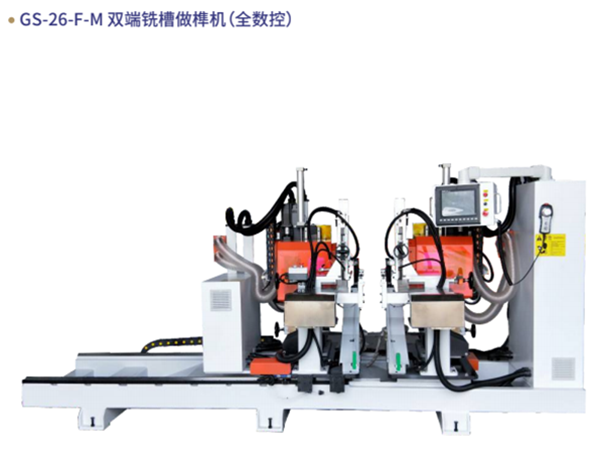
In wood product structures, the holes with circular cross-section are called holes, while the holes that cooperate with the mortise are called eyes. Because there are different structures of mortises, the shapes of eyes holes are also different. When the cross-section of the mortise is circular (round mortise), the eye hole is also round. Different mortises, different eyes, the shapes of drill machine tools and mortise machine tools are also different. The above picture is the sawing machine we often saw in the factory during this internship. It is used to open the mortise eyes of the door frame connection slot. Kunming San De Wood Door Manufacturing Co., Ltd. uses this woodworking sawing machine to open mortise eyes. Woodworking milling machine, in addition to the fixed working table, also has an adjustable working table. The adjustable working table is suitable for milling the mortise at the end of the board or timber (that is, the raw material end extends to the milling cutter for processing), so there are single-axis woodworking milling machines in various furniture factories. Kunming Xinfengl, Kunming Sen Gong, San De Wood Industry Company, Anning Jilong Wood Industry Manufacturing Factory, and the American-owned company - Kunming Austen Wood Industry Co., Ltd., all cannot do without this single-axis woodworking milling machine, because its working table is flexible, convenient and practical. The structure composition of the lifting screw pair between the lifting screw and the frame of the wide band sanding machine belongs to the field of sanding machine manufacturing. It includes the sanding machine, the working platform support cross axis is connected to the lifting screw pair at both ends, the lifting screw pair is located in the frame and drives the working platform support cross axis to move up and down, the working platform is located on the working platform support cross axis. Advantages: Firstly, it not only fundamentally solves the technical problems of waterproofing and dust-proofing for the lifting screw rod pair, but also significantly improves the stability performance; Secondly, by effectively addressing the waterproofing and dust-proofing issues of the lifting screw rod pair, it not only ensures the synchronization of the lifting and lowering of the two sets of lifting screw rod pairs in terms of accuracy, but also significantly increases the service life. The wide-belt sanding machine can usually perform uniform sanding at a fixed thickness. When sanding large panels or parts, its sanding efficiency is very high. Currently, it is the most widely used sanding equipment. The sanding methods of the wide-belt sanding machine are divided into two types: one is the contact roller type sanding, and the other is the press plate type sanding. The wide-belt sanding machine can be classified into two types according to the feeding method: the track feeding type and the roller feeding type. The former is mainly used for sanding plywood, fine woodwork boards, and window frames, while the latter is mainly for medium-density fiberboard and particleboard. The sanding method of the wide-belt sanding machine is divided into two types: one is the contact roller type sanding, and the other is the press plate type sanding. The wide-belt sanding machine can be classified into two types according to the feeding method: the track feeding type and the roller feeding type. The former is mainly used for sanding plywood, fine woodwork boards, and window frames, while the latter is mainly for medium-density fiberboard and particleboard. The sanding machine is a necessary equipment in furniture factories. Various connecting parts of furniture need to undergo surface sanding, and the sanding machine plays a crucial role. Narrow-belt sanding machines and wide-belt sanding machines are essential equipment in various furniture factories. For Dezheng wooden doors, the wide-belt sanding machine is a necessary equipment for the wooden door production line. Various surface sanding of connecting parts must go through the sanding machine. This course practice gives us the opportunity to combine theory with practice in doing things. We should conduct on-site investigations instead of blindly working in isolation. Otherwise, we would be unaware that the vehicle is not suitable for the road outside. Practice is a necessary part of learning professional knowledge. This practice has yielded significant results. Through this internship, we have a deeper understanding of the "Woodworking Machinery" course. We have a clearer understanding of the transformation from knowledge to practical application regarding some necessary matters in woodworking tools and the processing of wood products. This internship has shown that there is indeed a certain gap between theory and practice. The knowledge we learned before often becomes ineffective in reality. In reality, practical experience and on-the-spot adaptability skills are often relied upon. Especially for those who frequently use woodworking tools to process wood products, practical experience and on-the-spot adaptability skills will be particularly important. At the same time, this internship has also made us realize our shortcomings and deficiencies. In the future study and life, we will work harder to lay a solid foundation for entering the workplace and society.
Part Two: Definitions of Woodworking Machinery Terms:
1. BY: Artificial Board Pressing Machine
2. MJ: Woodworking Saw Machine
3. Woodworking Machinery: In the woodworking processing technology, the processing of raw materials for wood products is called a type of machine tool.
4. Main Parameters of Woodworking Machinery: Parameters reflecting the basic structure and working performance of woodworking machines.
5. Processability: The ability of woodworking machines to adapt to different production requirements. It can be roughly divided into the following contents: ① The types of processes that woodworking machines can complete; ② The types of materials, sizes, and dimensions of the materials to be processed; ③ The applicable production scale; ④ The cost of processing parts.
6. Processing Accuracy: The degree of accuracy that the processed workpiece can achieve in terms of size, shape, and relative position. 7. Safety: The woodworking machine is easy to operate, labor-saving, easy to master, less prone to failure and operation errors, reduces workers' remuneration, and ensures the safety of workers and the woodworking machine.
8. Reliability: The proportion of fault-free working time of woodworking machines to the total time.
9. Efficiency of Woodworking Machines: The ratio of effective power used to input power.
10. Horizontal Band Saw Machine: Used for plate processing, especially for precious wood.
11. Band Saw Machine: A machine tool that uses a ring-shaped endless toothed band saw blade that is tightened and rotates on two saw wheels to achieve wood sawing in a continuous motion in one direction.
12. Main Parameters of Artificial Board Machinery: Parameters representing the working capacity of artificial board machinery and the basic structure of artificial board machinery. 13. Planer: Used to convert small-diameter logs, leftover materials, or wood chips into wood shavings of a certain thickness.
14. Hot grinder: A continuous separation device that separates plant materials such as wood chips into fibers under high temperature and high pressure conditions.
15. Wood panel machinery: A new component in modern woodworking machinery, referring to all processing equipment in the wood panel industry system.
16. Woodworking planer: A machine tool used to process raw materials into workpieces with precise dimensions and cross-sectional shapes, while ensuring that the surface of the workpiece has a certain surface roughness.
17. Flat planer: Used to process the surface of the raw material into a flat shape, making the processed surface the required processing and measurement reference surface for subsequent processes.
18. Single-sided pressure planer: A planer used to cut square and sheet materials into a certain thickness.
19. Double-sided pressure planer: A planer used to process both sides of the wood workpiece simultaneously.
20. Woodworking milling machine: Used for curve-shaped and straight-line forming of plane milling of components.
21. Hot press board: A component for transmitting heat and pressure. The quality of its heat transmission performance, the size of mechanical strength and stiffness, etc.