

The furniture industry is an evergreen industry. China's furniture industry has achieved substantial development and made important contributions to stimulating the national economic development. Chinese furniture enterprises have started to adjust their product structures and upgrade their industries in response to the market. Therefore, the development prospects for Chinese furniture enterprises are optimistic. They will play a more active role in expanding consumption and driving economic development, and Chinese furniture enterprises will surely achieve the transition from a major furniture production country to a powerful one.

After China joined the World Trade Organization, the furniture industry will become one of the industries with the largest tariff reduction, second only to the automobile industry. From January 2005, furniture import tariffs will be reduced from the original 22% to zero. At that time, more overseas enterprises will enter the Chinese market, and the Chinese furniture industry will face even greater challenges.

Driven by domestic demand and exports, the scale of China's furniture manufacturing industry has developed rapidly in the past few years. Between 2000 and 2015, the main business revenue of China's furniture manufacturing industry grew from 32.7 billion yuan to 787.3 billion yuan, with an average annual growth rate of 24%. After China joined the World Trade Organization in 2000, with the further opening of the market and the reduction of trade tariff barriers, China's furniture export volume maintained double-digit growth for many years, remaining stable at a high level since 2009. In 2014, the delivery value for exports of China's furniture manufacturing industry reached 162.4 billion yuan. Currently, China is the world's largest furniture exporter and consumer market.
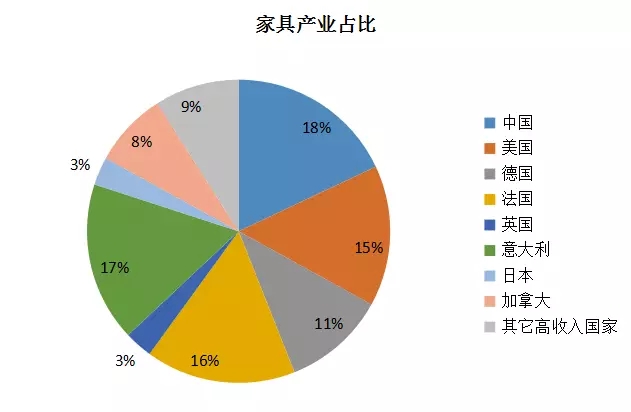
(2016 Market Distribution of International Furniture Industry Share)
Newly purchased residential decoration demand is expected to continue to steadily drive the development of the furniture market. As the traditional source of new housing demand, urban self-occupied housing dominated by rigid housing purchase and improvement-type second housing purchase, saw an average annual sales area of nearly 900 million square meters in China from 2006 to 2015. In recent years, China has also accelerated the pace of new urbanization, promoted the circulation of rural land, encouraged farmers to settle in cities, further stimulated the construction of new residential buildings, and driven the rapid expansion of the furniture market scale. Looking ahead, with the further increase of China's urbanization rate and the development of government-subsidized housing construction, newly built residential buildings are expected to continue to steadily drive the long-term development of the furniture market, bringing significant development space for the domestic furniture industry.
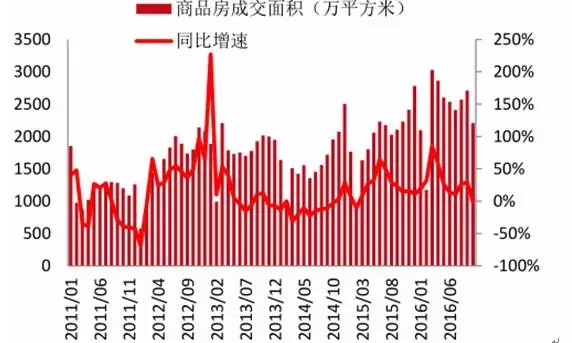
(Fluctuations in Commodity Housing Transaction Area and Growth Rate from 2011 to 2016)

First, let's summarize the three major characteristics of the furniture industry.
First, the furniture industry has a low concentration rate. China's furniture manufacturers are still dominated by small and medium-sized enterprises, and the industrial concentration is much lower than that of other industries. According to statistics, the sales volume of the top ten enterprises in the furniture industry only accounts for 2.8% of the entire industry. In industries with high concentration, this ratio should account for 20%. Even considering the particularity of the furniture industry, its concentration is still relatively low.
Second, private and joint venture enterprises dominate absolutely. In China's furniture manufacturing enterprises, non-state-owned enterprises dominate, and among non-state-owned furniture manufacturing enterprises, joint venture and private enterprises are the mainstay. The production capacity of joint venture enterprises is in a strong position in the industry, and their products are mainly positioned in the mid-to-high-end furniture market. According to statistics, the sales volume of joint venture enterprises accounts for about 52% of the total sales volume of the national furniture industry. Well-known brands in the market are also mostly joint venture enterprises.
Third, the efficiency of furniture production needs to be improved. Although China has become a major furniture production country, there is still a large gap between the production efficiency of Chinese furniture enterprises and that of developed countries. According to statistics, among the world's major furniture production countries, Italy is 45,000 US dollars/person•year, Japan is 108,000 US dollars/person•year, the United Kingdom is 30,000 US dollars/person•year, Canada is 92,000 US dollars/person•year, while China's furniture production efficiency is only 3,000 US dollars/person•year.

The year-on-year increase in enterprise operating costs, the improvement of process technology, cost-effectiveness, and low-carbon environmental protection issues force more enterprises to gradually think about modernization of production, process management, and industrial management thinking. Under the influence of management methods and concepts, labor productivity, and production equipment, there is a need to choose to use fewer personnel to achieve faster efficiency, more standardized products, and higher craftsmanship. Therefore, absorbing venture capital has become an important means for the furniture industry to achieve industrial upgrading and rapid expansion.


Mechanized mass production is the only way that conforms to today's furniture market demand and the current situation of furniture enterprises.
First, with economic development, today's consumers have a huge demand for furniture. Relying solely on manual production cannot meet the growing market demand;
Second, with the progress and wide application of technology, enhancing the mechanization degree of furniture enterprises can improve their production efficiency, expand production scale, and achieve better development;
Finally, the furniture industry generally suffers from a labor shortage, serious loss of technical talents, and increasingly high labor costs. Salaries are constantly rising, exceeding the level that enterprises can bear. Therefore, strengthening the mechanization process can reduce the costs of furniture enterprises, improve production efficiency, and production technology levels.
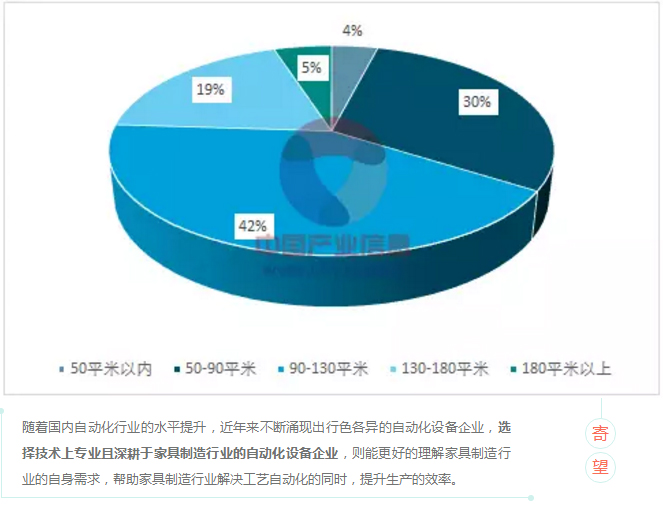
Dongguan Chenzhan Woodworking Machinery Co., Ltd. is a manufacturer specializing in the research and development and production of automated furniture manufacturing equipment. The company's team originated in 2005. Mr. Chen Gongbin, the general manager of the company, was previously dedicated to furniture manufacturing production for decades and has profound technology and experience in furniture manufacturing processes and automation. Thanks to a solid foundation in furniture manufacturing automation production and equipment, he led the team to independently develop CNC machinery and professional equipment starting in 2011, providing solutions and machinery for dining tables and chairs, beds, coat racks, and other furniture manufacturing. The company offers more than 20 types of products. Compared to traditional production models, it can double the efficiency for customers, save half of the labor costs, and create more than double the turnover. To date, it has served over 30 cities in China and expanded into multiple overseas markets, with customers遍布 (distributed) both domestically and internationally.

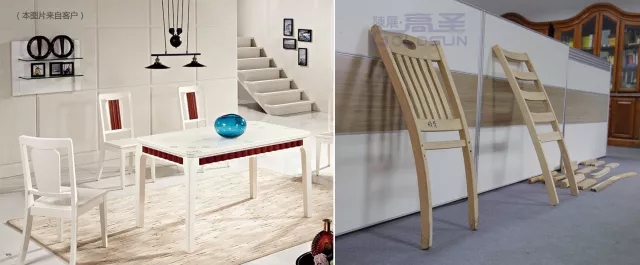
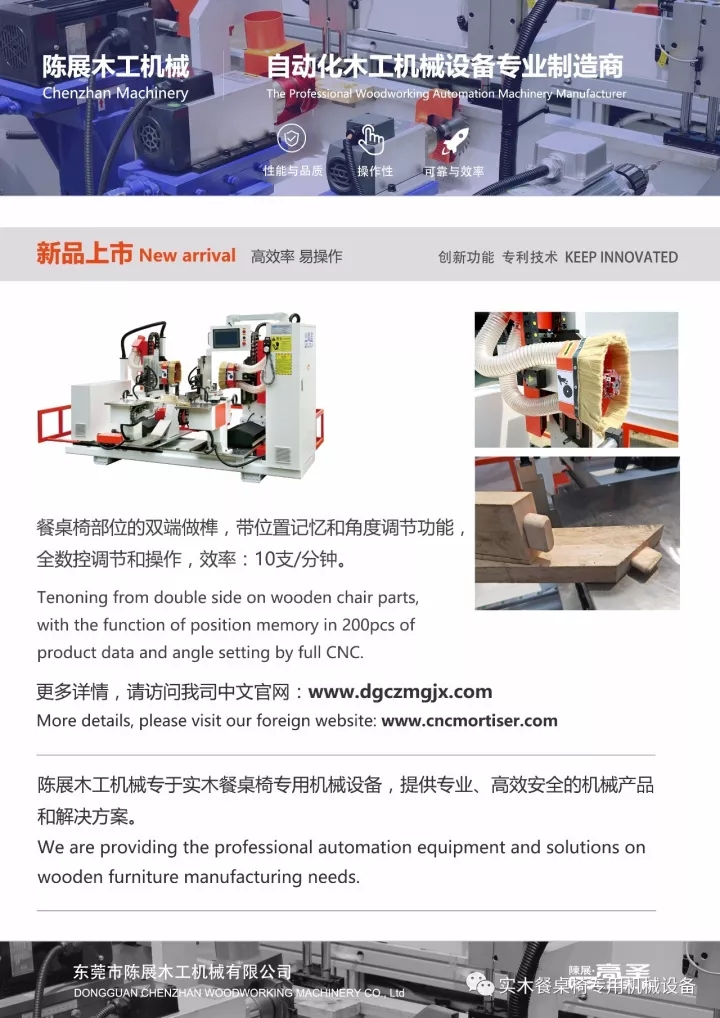
In the Dining Table and Chair Solutions, the company provides a series of CNC automation equipment needed for solid wood dining tables and chairs, such as table legs, chair legs, chair backs, chair rails, side panels, and seat frames for solid wood dining tables and chairs. Machinery replaces manual labor to complete tasks such as chamfering, drilling, tapping, slotting, reaming, profiling, copying, double cutting, tenoning, and inserting tenons, improving production efficiency and saving labor.
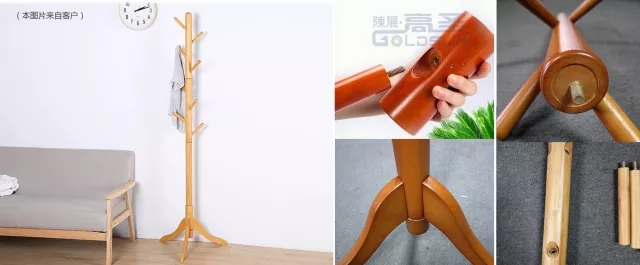
In the Coat Rack Solutions, the company provides CNC automation equipment needed for coat rack manufacturing. Machinery replaces manual labor to complete the inclined holes, double-end holes, and drilling and tapping processes at the bottom ends of the coat rack main rods. The efficiency is as high as 6 pieces/minute, over 2000 pieces/8 hours.
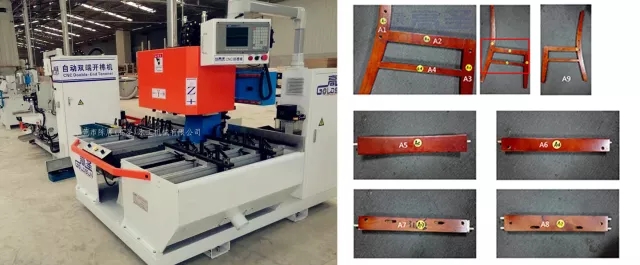
In the Customized Demand Solutions, in addition to standard products, the company also designs and produces automation equipment according to the customer's products, output requirements, and production processes, providing customers with customized solutions.
The company has unique advantages in the following areas.
1) Providing a complete set of furniture manufacturing automation equipment and excellent customized solutions, saving customers time on machinery procurement and enabling long-term cooperation on machinery needs.
2) Possessing an innovative and professional R&D team that follows market and customer needs to develop suitable, safe, and efficient machinery products. Strict requirements for high-standard product quality, technology, and quality control management make the products more reliable and durable.
3) Professional service and support. Possessing a one-stop service of technical guidance, operation and machine adjustment training, and after-sales service. With numerous dealers in major domestic markets and overseas markets, local after-sales service is convenient.
For more company details, please visit the company website www.dgczmgjx.com, or contact us with the following contact information!


+86 134-5008-5838
Mr. ChenCopyright © 2026 Ganzhou Chenzhan Woodworking Machinery Co., Ltd. All rights reserved
The web page materials and related resources on this site are all sourced from the Internet. If there is any infringement, please notify us immediately. We will delete them within 24 hours.